MealMover
Blog

Latest articles & recipes

Filtered by tag:#miscellaneous
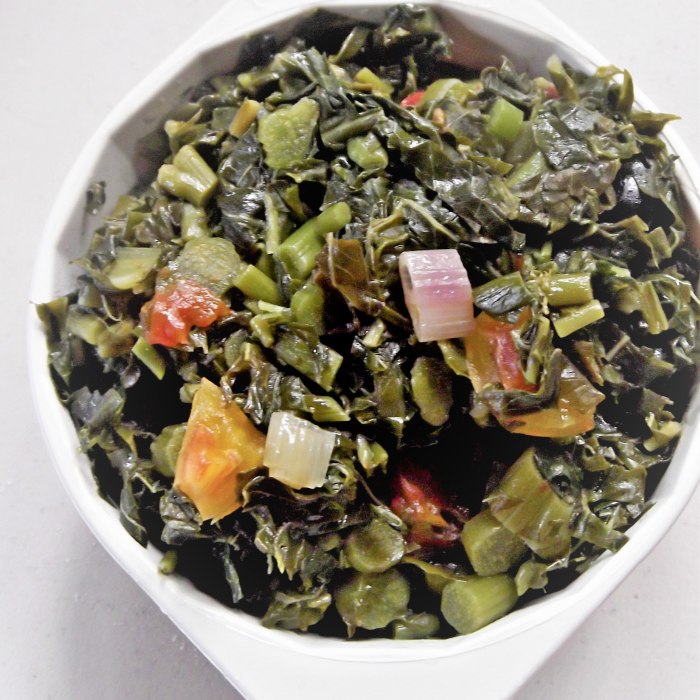
Callaloo Jamaican Style
#savory

Callaloo Jamaican Style

Cut leaves and soft stems from the kale branches, them soak in a bowl of cold water for about 5-10 minutes or until finish with prep. Proceed to slicing the onions, mincing the garlic and dicing the tomatoes. Set aside Remove kale from water cut in chunks. Place bacon on saucepan and cook until crispy. Then add onions, garlic, thyme, stir for about a minute or more Add tomatoes; scotch bonnet pepper, smoked paprika. Sauté for about 2-3 more minutes. Finally add vegetable, salt, mix well, and steamed for about 6-8 minutes or until leaves are tender. Add a tiny bit of water as needed. Adjust seasonings and turn off the heat. Using a sharp knife cut both ends off the plantain. This will make it easy to grab the skin of the plantains. Slit a shallow line down the long seam of the plantain; peel only as deep as the peel. Remove plantain peel by pulling it back. Slice the plantain into medium size lengthwise slices and set aside. Coat a large frying pan with cooking oil spray. Spray the tops of the plantains with a generous layer of oil spray and sprinkle with salt, freshly ground pepper. Let the plantains "fry" on medium heat, shaking the frying pan to redistribute them every few minutes. As the plantains brown, continue to add more cooking oil spray, salt and pepper (if needed) until they have reached the desired color and texture. Remove and serve with kale

Read more
Chakchouka
#miscellaneous

Chakchouka

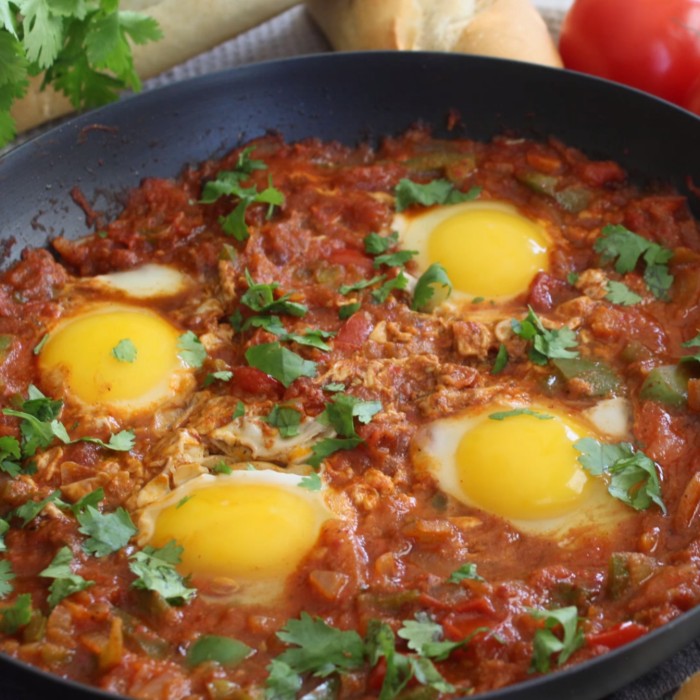
In a large cast iron skillet or sauté pan with a lid, heat oil over medium high heat. Add the onion and sauté for 2-3 minutes, until softened. Add the peppers and garlic, and sauté for an additional 3-5 minutes. Add the tomatoes, cumin, paprika, salt, and chili powder. Mix well and bring the mixture to a simmer. Reduce the heat to medium low and continue to simmer, uncovered, 10-15 minutes until the mixture has thickened to your desired consistency. (Taste the sauce at this point and adjust for salt and spice, as desired.) Using the back of a spoon, make four craters in the mixture, large enough to hold an egg. Crack one egg into each of the craters. Cover the skillet and simmer for 5-7 minutes, until the eggs have set. Serve immediately with crusty bread or pita.

Read more
Clear Soup with Semolina Dumplings
#miscellaneous

Clear Soup with Semolina Dumplings

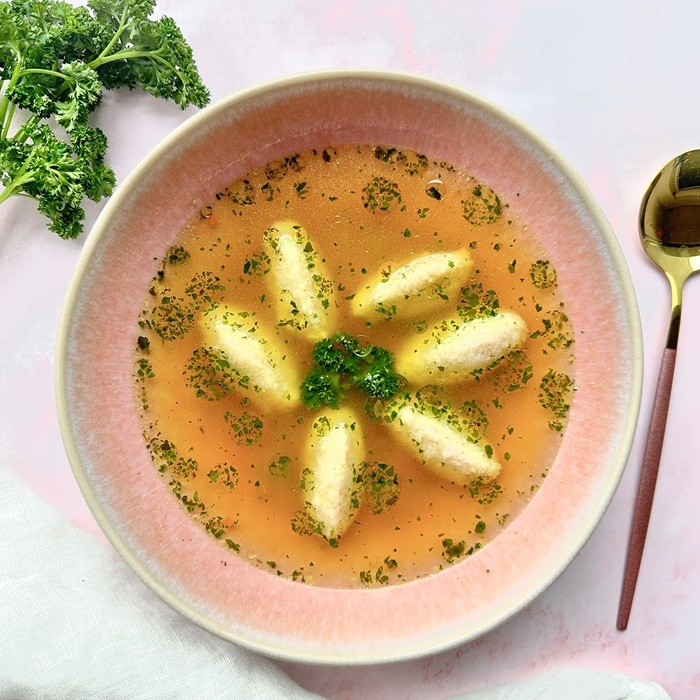
Step 1 Allow butter to come to room temperature before beating in a bowl until creamed. Season with salt and a small, delicate pinch of nutmeg. Step 2 Add in the egg, stirring vigorously. Sprinkle the semolina over this, and mix it in well until the surface is smooth. Cover with saran wrap and leave to rest for 15 – 20 minutes. Step 3 Use two spoons, dipped regularly into hot water throughout, to press or shape dumplings from the paste. You can also place these on a lightly oiled board or plate and again leave them to stand for a short while (this allows the dumplings to rise even more). Step 4 Heat a generous quantity of salted water in a large pan. Place the dumplings into the water and bring them back to a boil before turning down the heat and leaving to simmer gently for 10 – 15 minutes (do not boil). Carefully turn the dumplings occasionally. Step 5 Remove the semolina dumplings carefully and put them in the heated soup. Serve promptly, with a garnish of sprinkled parsley or chives. Step 6 The semolina dumplings can also be cooked in the beef broth, but this causes the soup to take on a slightly dull appearance. The cooked dumplings should never be left standing in the soup for too long, as they will “soak up” the soup and become softened.

Read more
Duck Confit
#miscellaneous

Duck Confit

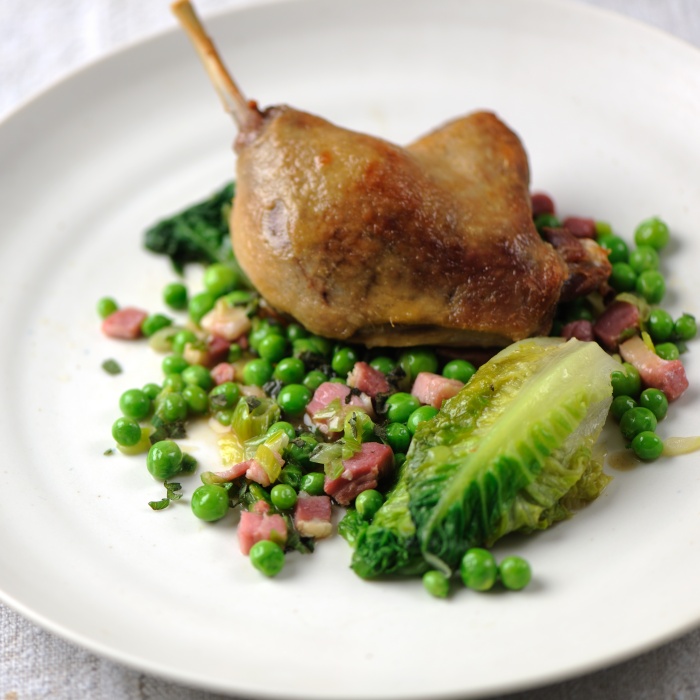
The day before you want to make the dish, scatter half the salt, half the garlic and half of the herbs over the base of a small shallow dish. Lay the duck legs, skin-side up, on top, then scatter over the remaining salt, garlic and herbs. Cover the duck and refrigerate overnight. This can be done up to 2 days ahead. Pour the wine into a saucepan that will snugly fit the duck legs in a single layer. Brush the salt off the duck legs and place them, skin-side down, in the wine. Cover the pan with a lid and place over a medium heat. As soon as the wine starts to bubble, turn the heat down to the lowest setting and cook for 2 hours, checking occasionally that the liquid is just barely simmering. (If you own a heat diffuser, it would be good to use it here.) After 2 hours, the duck legs should be submerged in their own fat and the meat should feel incredibly tender when prodded. Leave to cool. The duck legs are now cooked and can be eaten immediately – or you can follow the next step if you like them crisp. If you are preparing ahead, pack the duck legs tightly into a plastic container or jar and pour over the fat, but not the liquid at the bottom of the pan. Cover and leave in the fridge for up to a month, or freeze for up to 3 months. The liquid you are left with makes a tasty gravy, which can be chilled or frozen until needed. To reheat and crisp up the duck legs, heat oven to 220C/fan 200C/gas 7. Remove the legs from the fat and place them, skin-side down, in an ovenproof frying pan. Roast for 30-40 mins, turning halfway through, until brown and crisp. Serve with the reheated gravy, a crisp salad and some crisp golden ptoatoes.

Read more
French Omelette
#egg

French Omelette

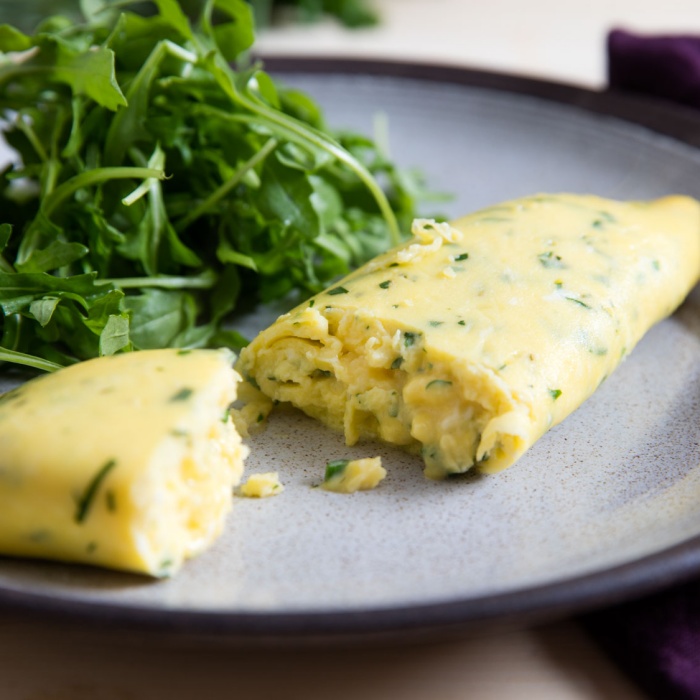
Get everything ready. Warm a 20cm (measured across the top) non-stick frying pan on a medium heat. Crack the eggs into a bowl and beat them with a fork so they break up and mix, but not as completely as you would for scrambled egg. With the heat on medium-hot, drop one knob of butter into the pan. It should bubble and sizzle, but not brown. Season the eggs with the Parmesan and a little salt and pepper, and pour into the pan. Let the eggs bubble slightly for a couple of seconds, then take a wooden fork or spatula and gently draw the mixture in from the sides of the pan a few times, so it gathers in folds in the centre. Leave for a few seconds, then stir again to lightly combine uncooked egg with cooked. Leave briefly again, and when partly cooked, stir a bit faster, stopping while there’s some barely cooked egg left. With the pan flat on the heat, shake it back and forth a few times to settle the mixture. It should slide easily in the pan and look soft and moist on top. A quick burst of heat will brown the underside. Grip the handle underneath. Tilt the pan down away from you and let the omelette fall to the edge. Fold the side nearest to you over by a third with your fork, and keep it rolling over, so the omelette tips onto a plate – or fold it in half, if that’s easier. For a neat finish, cover the omelette with a piece of kitchen paper and plump it up a bit with your fingers. Rub the other knob of butter over to glaze. Serve immediately.

Read more
Madombi: Dumplings from Botswana
#miscellaneous

Madombi: Dumplings from Botswana

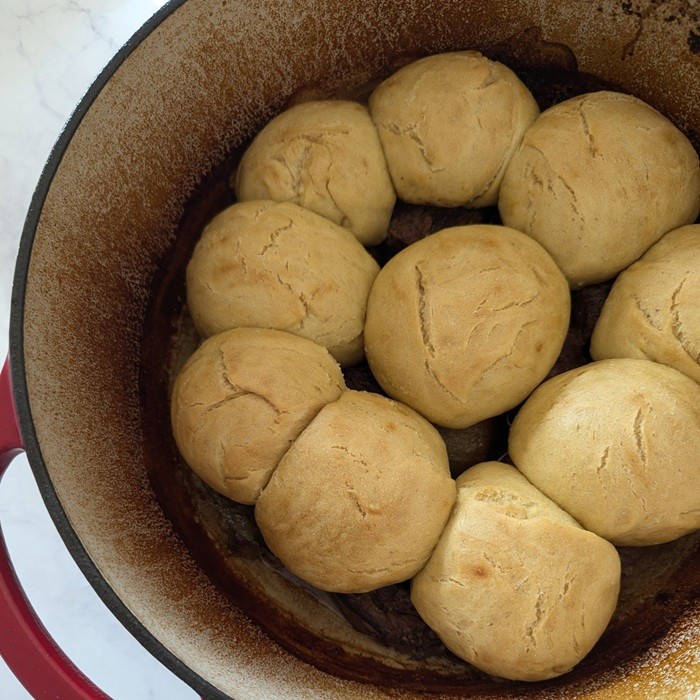
This recipe requires a stew to steam the dumplings on top of, at abour 180℃ or 350℉, give or take (it doesn't have to be specific, but can't be very high or very love heat). You will add the dumplings in during the last thirty minutes of your stew's cooking time, They need to steam covered, so the stew should be in a lidded pot that is oven-proof. Mix the dumpling dough In a measuring cup, combine the warm water, sugar, and yeast. Leave until foamy, about 5 minutes. To a stand mixer bowl, or a large bowl if mixing by hand, add the flour and salt. Stream in the water-yeast mixture while kneading. Knead for several minutes after the dough comes together, until a smooth ball of dough forms. Leave the dumpling dough to rise Place the ball of dough in an oiled dough, cover, and leave to rise until doubled, about 1 hour. Shape the dumplings Divide the risen ball of dough into 10 equal portions for large dumplings, or 12-14 portions for smaller dumplings. Shape each portion of dough into a smooth, round ball. Steam the dumplings In the last thirty minutes of cooking a stew, place the shaped dumplings right atop the stew. Push them down gently into the stew. Cover tightly and return to the oven for 25-30 minutes. The dumplings are done when they're risen and light golden.

Read more
Osso Buco alla Milanese
#miscellaneous

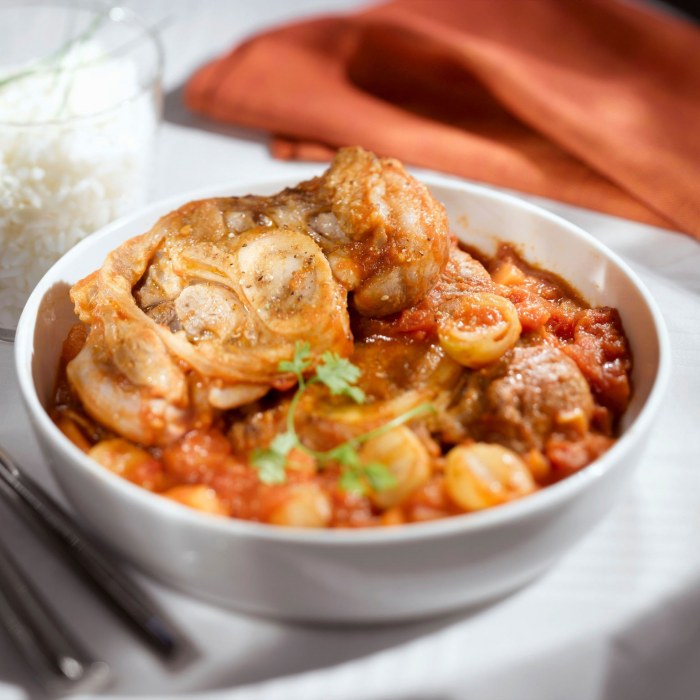
Osso Buco alla Milanese

Heat the oven to 300 degrees. Dredging the shanks: pour the flour into a shallow dish (a pie plate works nicely). Season the veal shanks on all sides with salt and pepper. One at a time, roll the shanks around in the flour coat, and shake and pat the shank to remove any excuses flour. Discard the remaining flour. Browning the shanks: put the oil and 1 tablespoon of the butter in a wide Dutch oven or heavy braising pot (6 to 7 quart) and heat over medium-high heat. When the butter has melted and the oil is shimmering, lower the shanks into the pot, flat side down; if the shanks won’t fit without touching one another, do this in batches. Brown the shanks, turning once with tongs, until both flat sides are well caramelized, about 5 minutes per side. If the butter-oil mixture starts to burn, lower the heat just a bit. Transfer the shanks to a large platter or tray and set aside. The aromatics: pour off and discard the fat from the pot. Wipe out any burnt bits with a damp paper towel, being careful not to remove any delicious little caramelized bits. Ad the remaining 2 tablespoons butter to the pot and melt it over medium heat. When the butter has stopped foaming, add the onion, carrot, celery, and fennel. Season with salt and pepper, stir, and cook the vegetables until they begin to soften but do not brown, about 6 minutes. Stir in the garlic, orange zest, marjoram, and bay leaf, and stew for another minute or two. The braising liquid: add the wine, increase the heat to high, and bring to a boil. Boil, stirring occasionally, to reduce the wine by about half, 5 minutes. Add the stock and tomatoes, with their juice, and boil again to reduce the liquid to about 1 cup total, about 10 minutes. The braise: Place the shanks in the pot so that they are sitting with the exposed bone facing up, and pour over any juices that accumulated as they sat. Cover with parchment paper, pressing down so the parchment nearly touches the veal and the edges hang over the sides of the pot by about an inch. Cover tightly with the lid, and slide into the lower part of the oven to braise at a gentle simmer. Check the pot after the first 15 minutes, and if the liquid is simmering too aggressively, lower the oven heat by 10 or 15 degrees. Continue braising, turning the shanks and spooning some pan juices over the top after the first 40 minutes, until the meat is completely tender and pulling away from the bone, about 2 hours. The gremolata: While the shanks are braising, stir together the garlic, parsley, and lemon zest in a small bowl. Cover with plastic wrap and set aside in a cool place (or the refrigerator, if your kitchen is very warm.) The finish: When the veal is fork-tender and falling away from the bone, remove the lid and sprinkle over half of the gremolata. Return the veal to the oven, uncovered, for another 15 minutes to caramelize it some. Using a slotted spatula or spoon, carefully lift the shanks from the braising liquid, doing your best to keep them intact. The shanks will be very tender and threatening to fall into pieces, and the marrow will be wobbly inside the bones, so this can be a bit tricky. But if they do break apart, don’t worry, the flavor won’t suffer at all. Arrange the shanks on a serving platter or other large plate, without stacking, and cover with foil to keep warm. Finishing the sauce: Set the braising pot on top of the stove and evaluate the sauce: if there is a visible layer of fat floating on the surface, use a large spoon to skim it off and discard it. Taste the sauce for concentration of flavor. If it tastes a bit weak or flat, bring it to a boil over high heat, and boil to reduce the volume and intensify the flavor for 5 to 10 minutes. Taste again for salt and pepper. If the sauce wants more zip, stir in a teaspoon or two of the remaining gremolata. Portioning the veal shanks: if the shanks are reasonably sized, serve one per person. If the shanks are gargantuan or you’re dealing with modest appetites, pull apart the larger shanks, separating them at their natural seams, and serve smaller amounts. Be sure to give the marrow bones to whomever prizes them most. Serving: Arrange the veal shanks on warm dinner plates accompanied by the risotto, if serving. Just before carrying the plates to the table, sprinkle on the remaining gremolata and then spoon over a generous amount of sauce – the contact with the hot liquid will aromatize the gremolata and perk up everyone’s appetite with the whiff of garlic and lemon.

Read more
Pizza Express Margherita
#miscellaneous

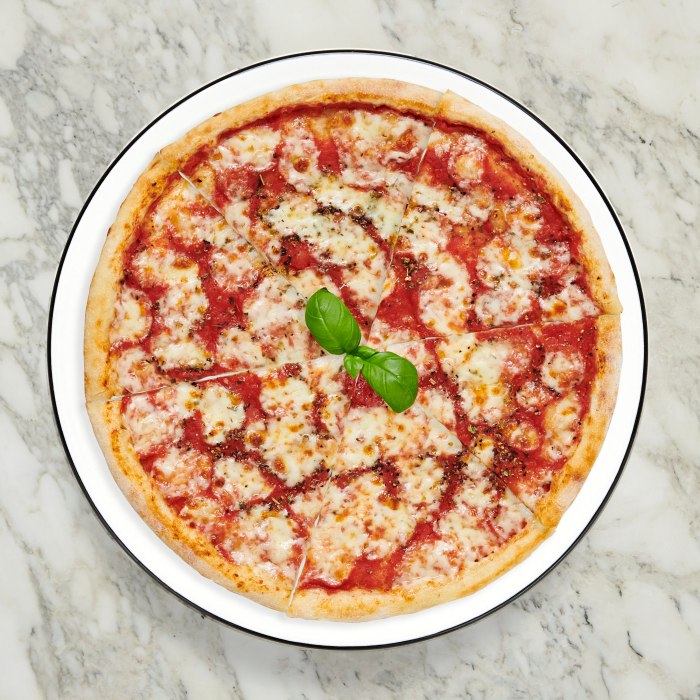
Pizza Express Margherita

1 Preheat the oven to 230°C. 2 Add the sugar and crumble the fresh yeast into warm water. 3 Allow the mixture to stand for 10 – 15 minutes in a warm place (we find a windowsill on a sunny day works best) until froth develops on the surface. 4 Sift the flour and salt into a large mixing bowl, make a well in the middle and pour in the yeast mixture and olive oil. 5 Lightly flour your hands, and slowly mix the ingredients together until they bind. 6 Generously dust your surface with flour. 7 Throw down the dough and begin kneading for 10 minutes until smooth, silky and soft. 8 Place in a lightly oiled, non-stick baking tray (we use a round one, but any shape will do!) 9 Spread the passata on top making sure you go to the edge. 10 Evenly place the mozzarella (or other cheese) on top, season with the oregano and black pepper, then drizzle with a little olive oil. 11 Cook in the oven for 10 – 12 minutes until the cheese slightly colours. 12 When ready, place the basil leaf on top and tuck in!

Read more

Page 1 of 3